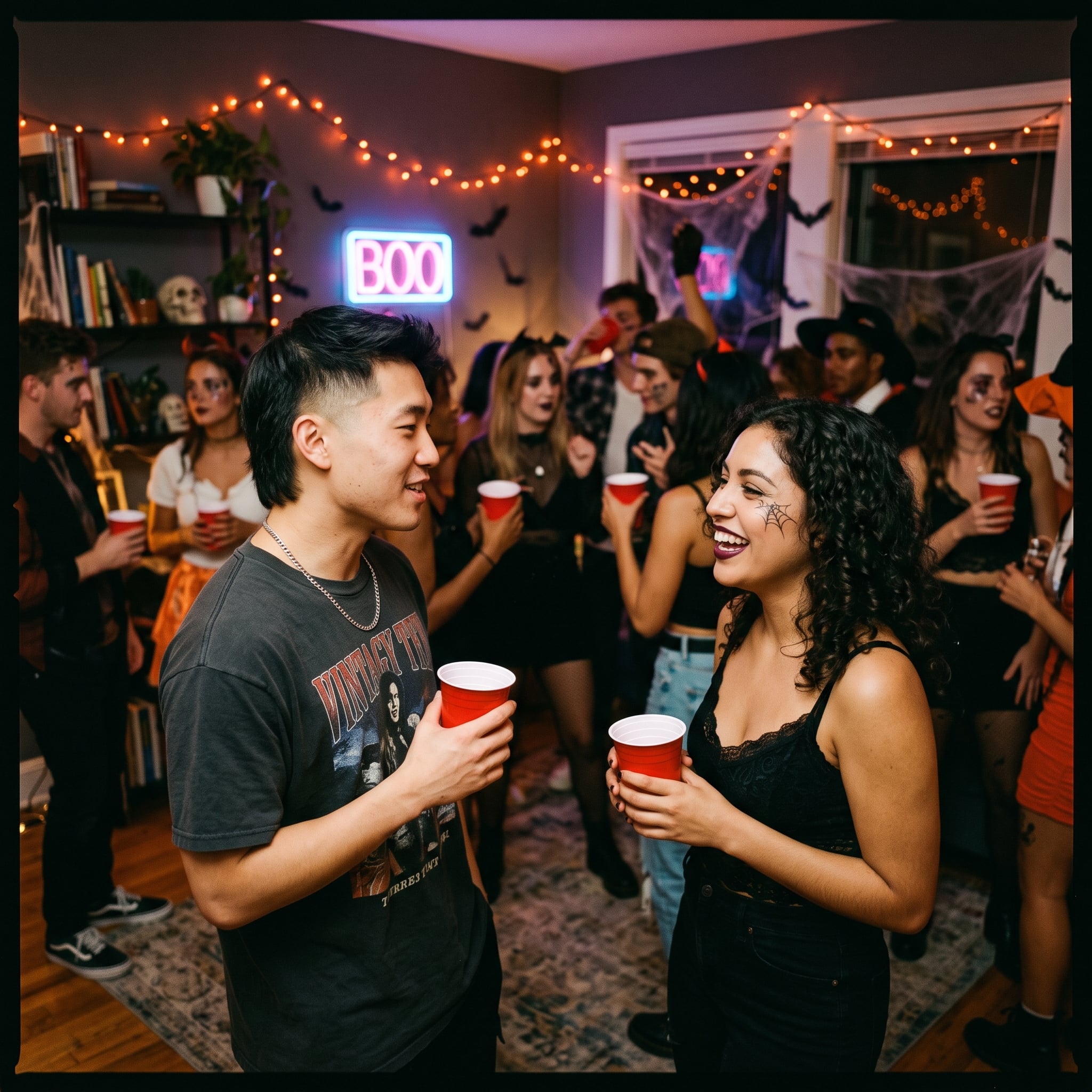
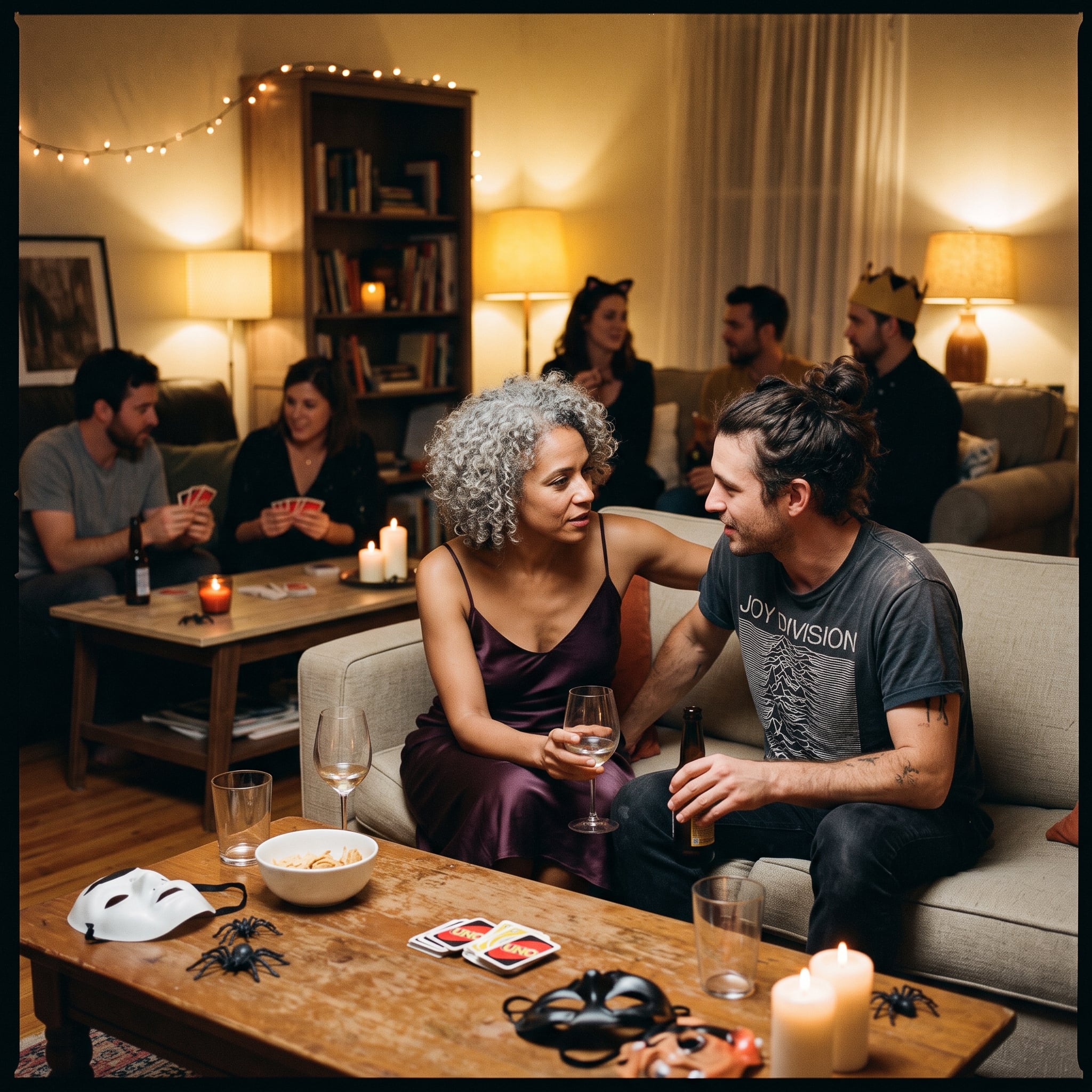
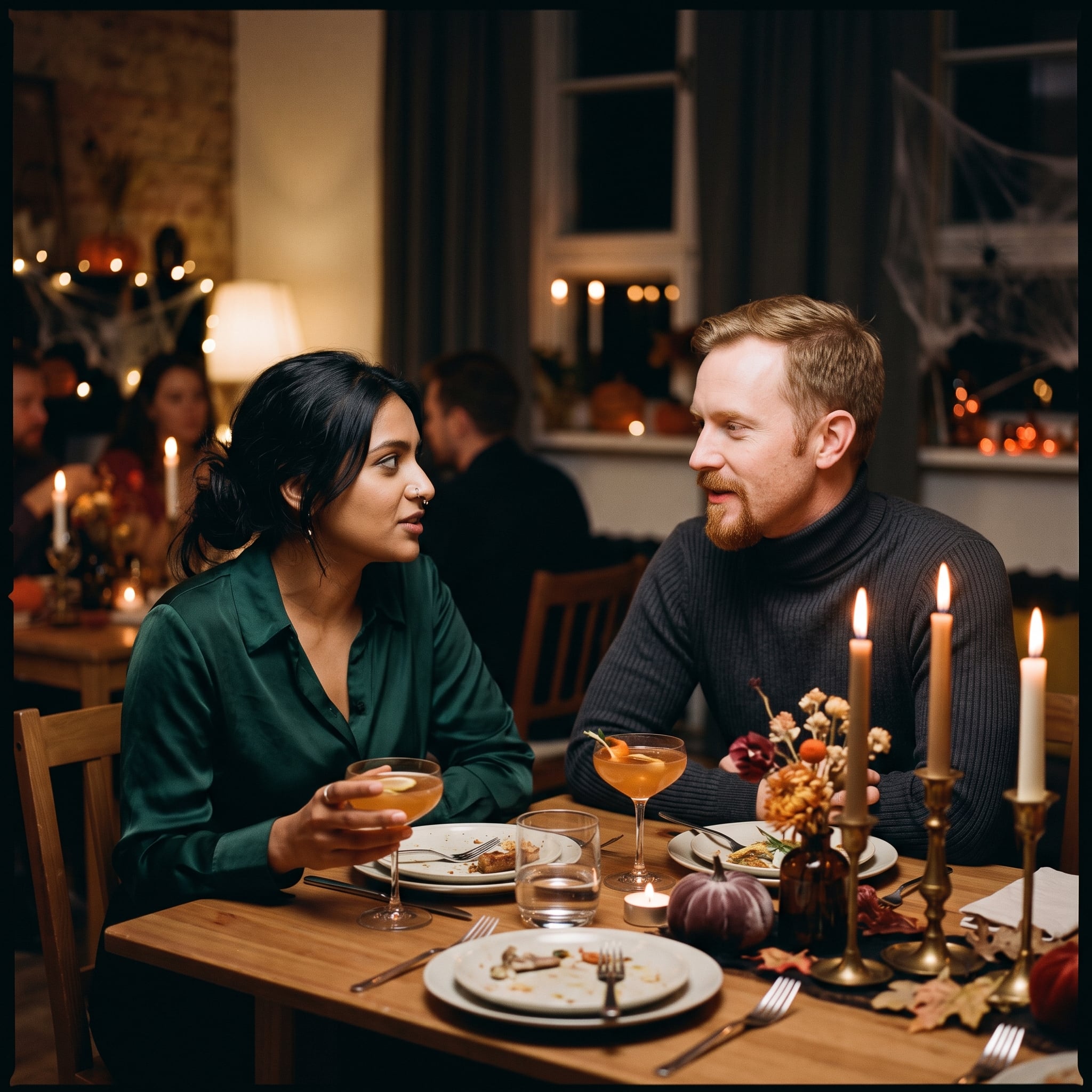
Once a Halloween party gets busy, complicated rules can quickly become a distraction. Guests may be arriving at different times, conversations are happening around the room, and nobody wants to spend ten minutes learning how to play before the fun begins.
That is where Halloween dice games fit naturally into an adult gathering. Dice are familiar, compact, and easy to bring into a party setting. A few rolls can create competition, suspense, or a quick reason for guests to gather around the table.

They also work across different types of groups. Close friends might enjoy adding playful challenges to each round, while a larger gathering may benefit from short games that guests can join without committing to a long session.
The idea is simple: keep the game accessible, then let the Halloween atmosphere do some of the work.
Halloween Dice Games Keep the Setup Simple
One reason Halloween dice games work well at parties is that they require very little preparation.
You do not need a large game board, multiple components, or a dedicated playing area. A table, a few dice, and enough space for guests to gather can be enough to get started.
Make the First Round Easy to Join
Guests should be able to understand what is happening by watching a round or two.
Simple formats can work particularly well when:
- People are arriving at different times
- Guests do not know each other well
- Several activities are happening at once
- You want to keep the evening flexible
A game that can start and stop easily is especially useful at a social party.
Let the Party Atmosphere Do Some of the Work
The dice do not need to carry the entire Halloween theme.
Costumes, lighting, music, drinks, and table decorations can provide the seasonal atmosphere while the game itself remains familiar.
This keeps the activity approachable while still making it feel like part of the celebration.
Halloween Dice Games for Adults Can Fit Different Group Sizes
Group size can change the way a dice game feels.
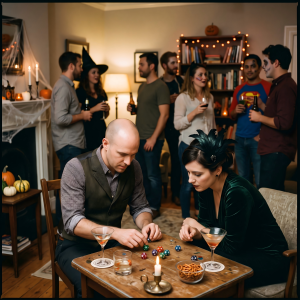
A small group has more room for conversation between turns, while a larger gathering often benefits from faster rounds and straightforward participation.
Small Groups
For four to six guests, a dice game can become a central part of the evening.
Players have more opportunities to interact directly, and the host can introduce additional challenges or variations without slowing things down.
Larger Groups
With more guests, shorter rounds tend to work better.
People can watch from the side, join when they are ready, or divide into smaller teams. This creates movement around the game rather than requiring everyone to sit down at once.
Mixed Groups
When guests have different personalities or levels of gaming experience, flexibility becomes particularly useful.
A casual dice format allows competitive players to enjoy the challenge while giving less competitive guests an easy way to participate.
Easy Dice Games Create Quick Moments of Competition
The appeal of Halloween dice games does not come from complicated strategy. It comes from the anticipation of each roll.
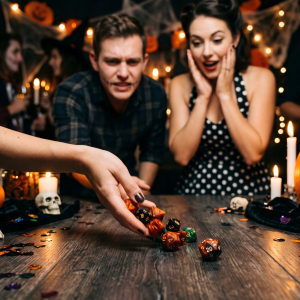
A single throw can change the outcome instantly, which gives even a short round a sense of suspense.
Keep the Rules Familiar
Simple formats can include:
- Highest roll wins
- Lowest roll loses
- Matching dice challenges
- Target-number games
- Team-based dice rounds
These basic formats can be adapted with Halloween-themed rules or small party challenges.
Add a Little Friendly Competition
Competition can give a casual gathering more energy, particularly when the stakes remain light.
You might use:
- Small Halloween prizes
- Costume-related rewards
- Funny titles for winners
- Team points
- Themed forfeits
The details can be as playful or as competitive as your group prefers.
Turn Halloween Dice Games Into Drinking Games
Dice also work naturally when you want to add a drinking element to an adult Halloween gathering.
Halloween dice games can become drinking games simply by assigning different outcomes to different rolls.
For example:
- One number triggers a question
- Another assigns a challenge
- A matching roll starts a group round
- A specific combination gives the roller a choice
The important part is keeping the rules easy enough that the game remains social rather than becoming a long explanation.
A dice-based drinking game can sit alongside food, music, and conversation instead of becoming the entire focus of the night.
Add Halloween Themes Without Complicating the Game
The easiest way to make Halloween dice games feel seasonal is to change the presentation rather than completely redesigning the rules.
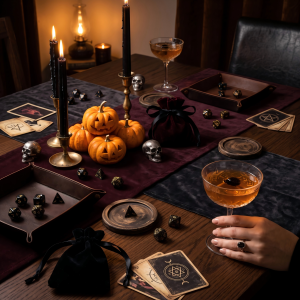
A familiar dice game can take on a Halloween personality through small details.
Costume-Based Rules
Connect certain rolls to costumes.
For example, the player with the most unusual costume might receive a bonus point or choose the next challenge.
Halloween Questions
Use rolls to determine different conversation prompts.
Guests might share:
- Their favorite horror movie
- Their funniest costume
- A memorable Halloween story
- Their most unusual party experience
Themed Challenges
A roll can also determine a short Halloween challenge.
Keep these quick enough that guests can return to the main party afterward.
This approach gives the game a seasonal identity without creating a completely new set of rules.
Dice Party Kits Make Spontaneous Games Easier
When a party involves several activities, having all the basic game components together can make setup easier.
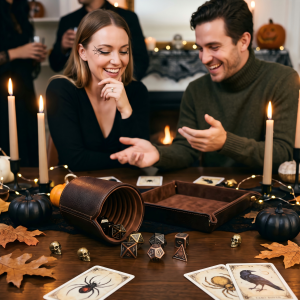
A Dice Party Kit can give hosts a ready collection for casual dice-based activities, especially when guests may want to switch between different games during the evening.
Instead of preparing individual pieces at different times, a dedicated kit can keep the game area organized and ready for the next round.
For a Halloween gathering, the kit can sit alongside themed cups, lighting, snacks, or other party accessories so the game becomes part of the overall setup.
Match the Dice Game to the Way Your Guests Socialize
Different groups will naturally gravitate toward different types of Halloween dice games.
| Guest Style | Dice Game Direction |
| Close friends | Competitive rounds |
| New or mixed groups | Simple guessing formats |
| Larger parties | Fast team games |
| Casual gatherings | Short challenge rounds |
| Drinking parties | Dice-based drinking games |
| Competitive groups | Target or score-based games |
The format should support the way people already want to spend time together.
If guests are moving around frequently, short rounds make sense. If everyone is gathered around one table, a longer competitive format can work well.
Keep Dice Games Part of the Evening, Not the Whole Evening
One advantage of Halloween dice games is their flexibility.

You can introduce a round when the party needs a little energy, pause when dinner or conversation takes over, and return to the game later.
Early Evening
Use a simple format to help guests settle in and start interacting.
Mid-Party
Bring out a more competitive version when most guests have arrived.
Later at Night
Return to short rounds that can continue alongside conversations and drinks.
This rhythm keeps the activity connected to the party rather than making the evening feel like a scheduled game session.
Final Thoughts
Halloween dice games work particularly well when you want entertainment that feels accessible, flexible, and easy to bring into an existing party.
The rules can stay simple while the experience changes with the group. Add competition for close friends, team formats for larger gatherings, or themed challenges when you want the game to feel more connected to Halloween.
With a few dice and the right setup, even a short round can give guests something to laugh about and remember.
For more ideas, explore our guide to Halloween party games for adults and discover other ways to keep your guests entertained throughout the night.