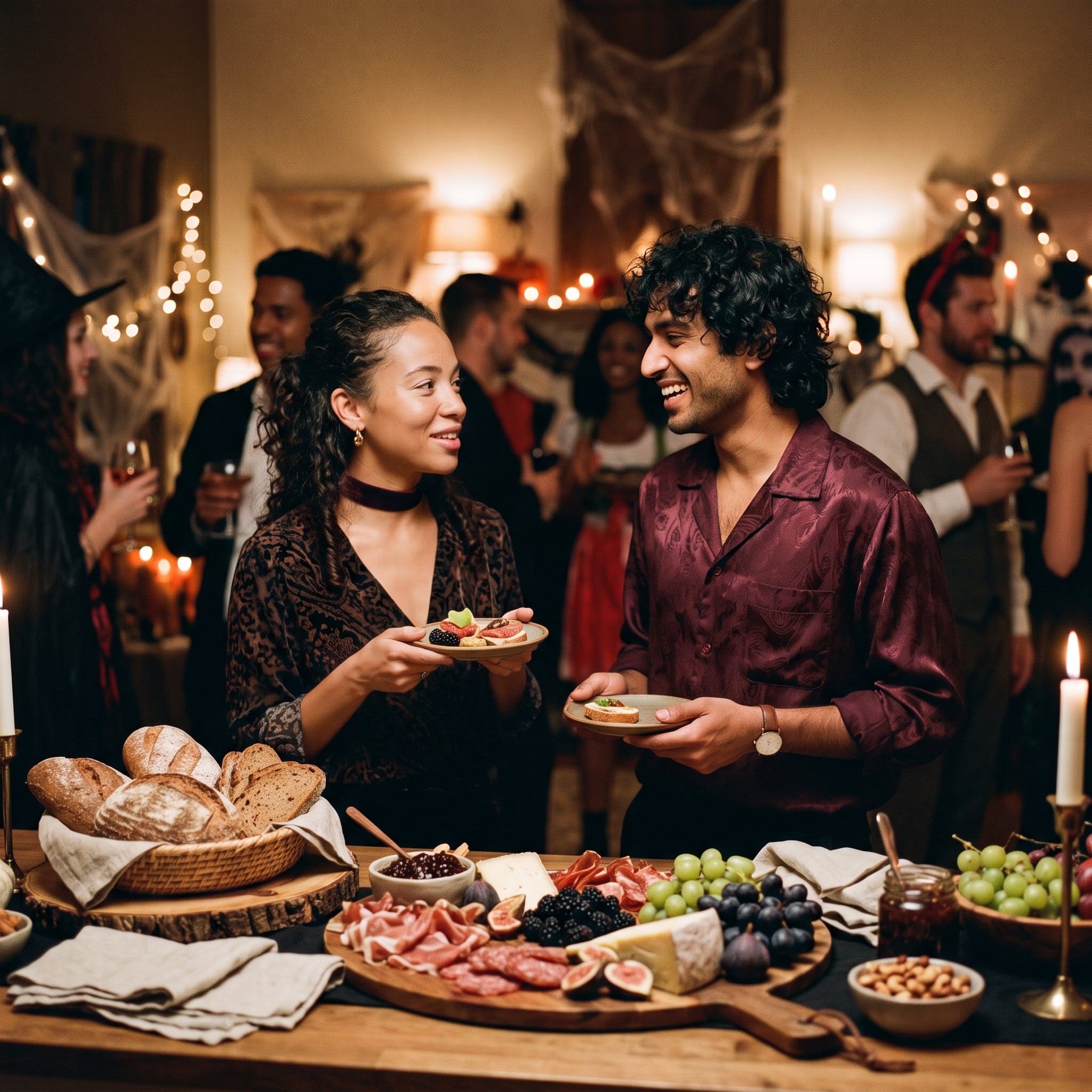
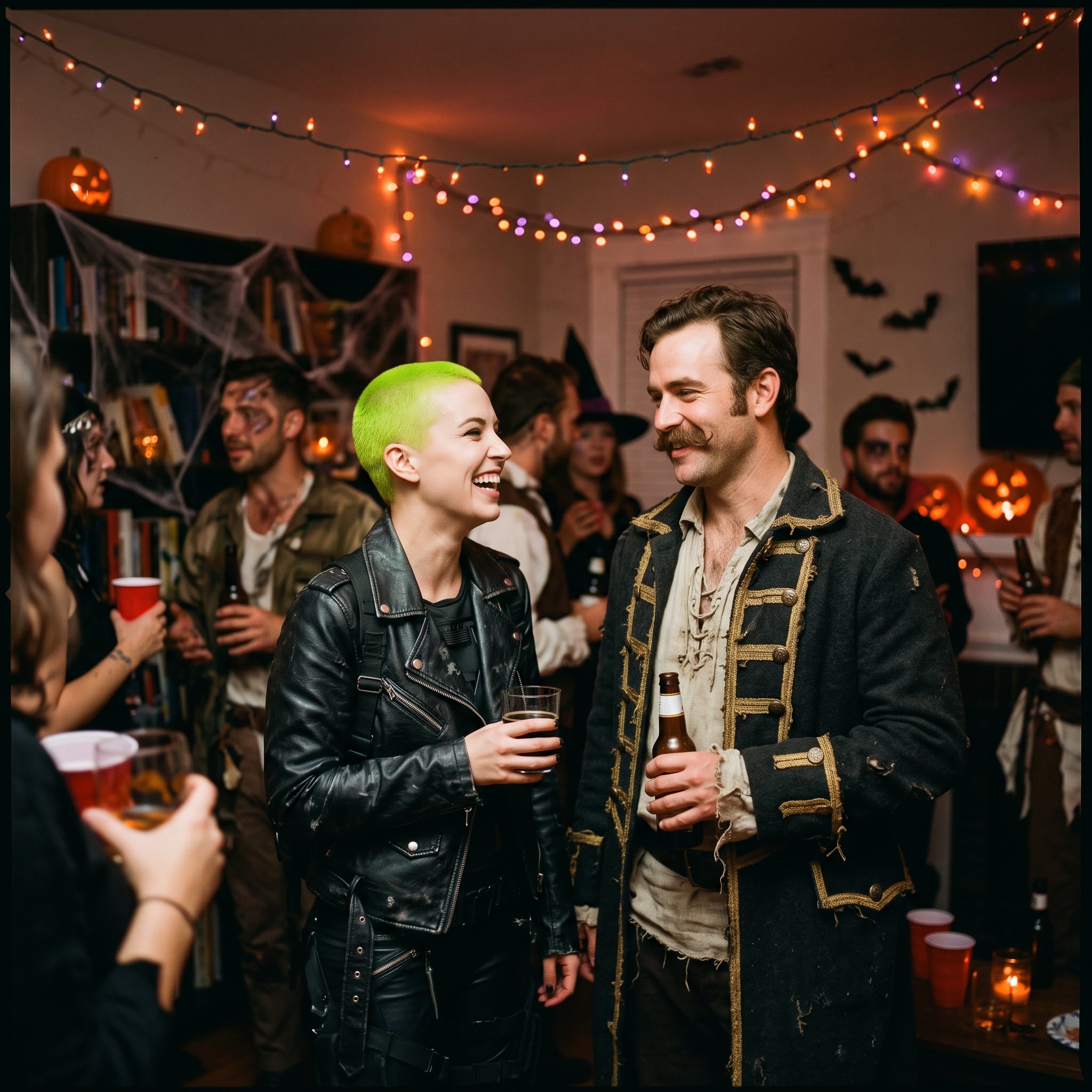
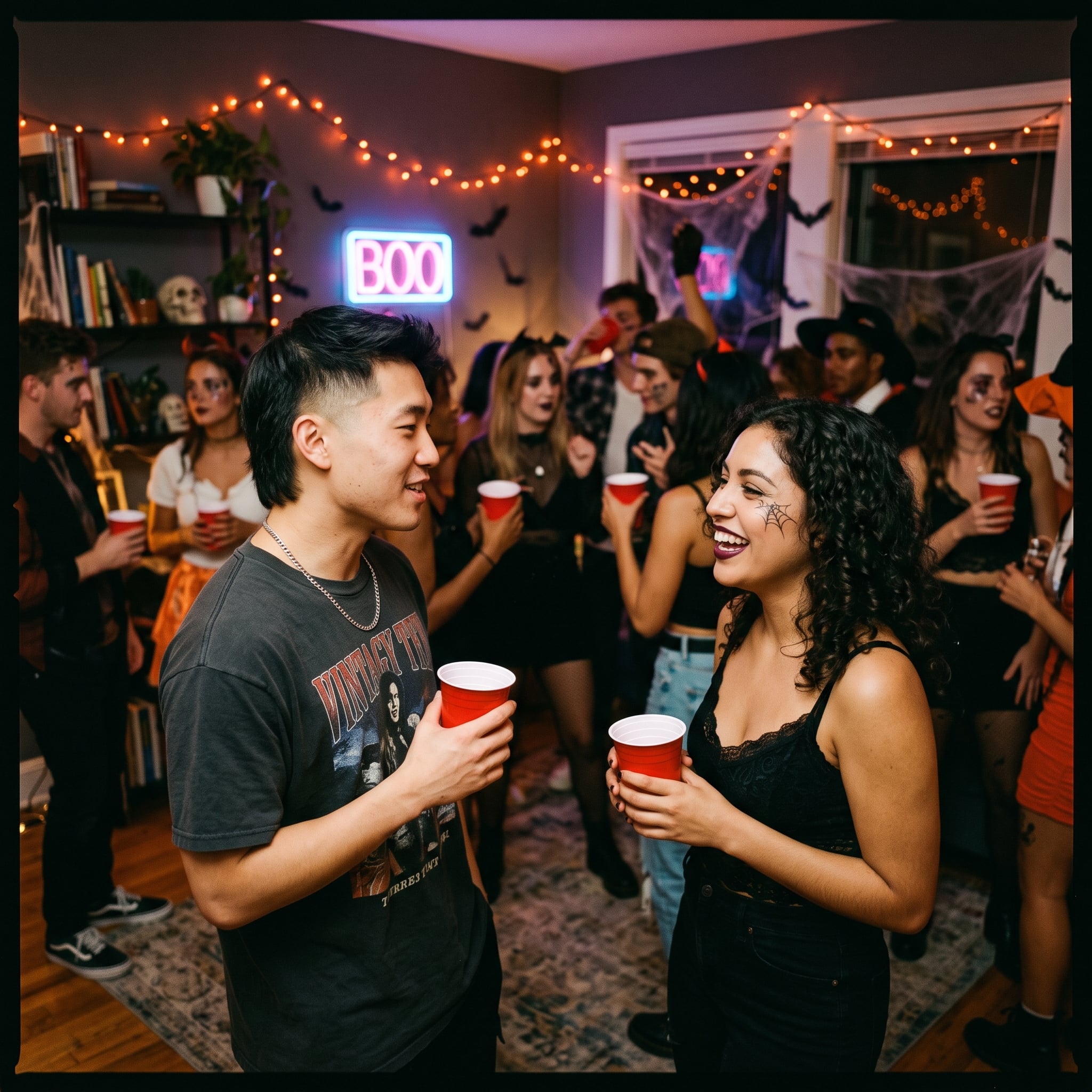
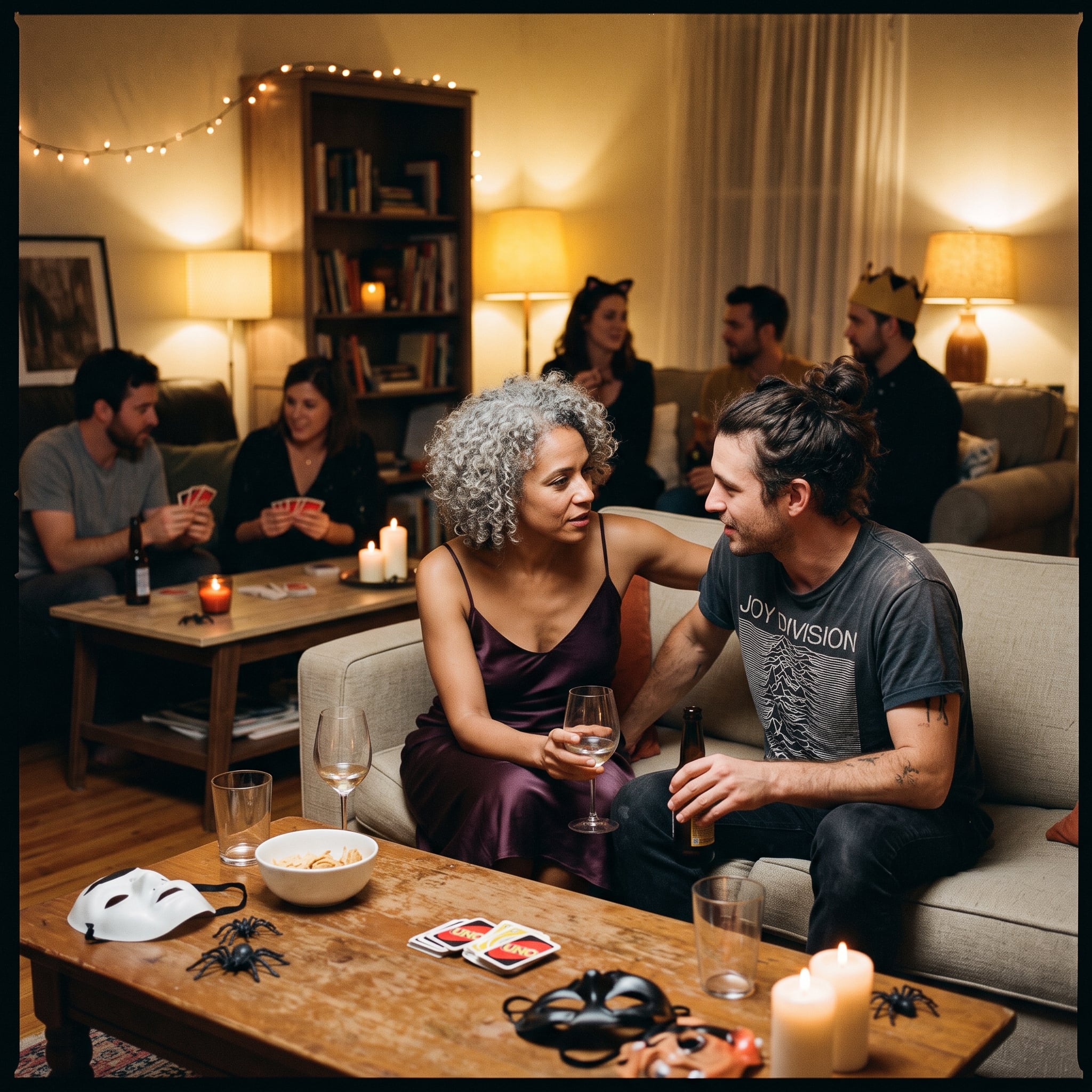
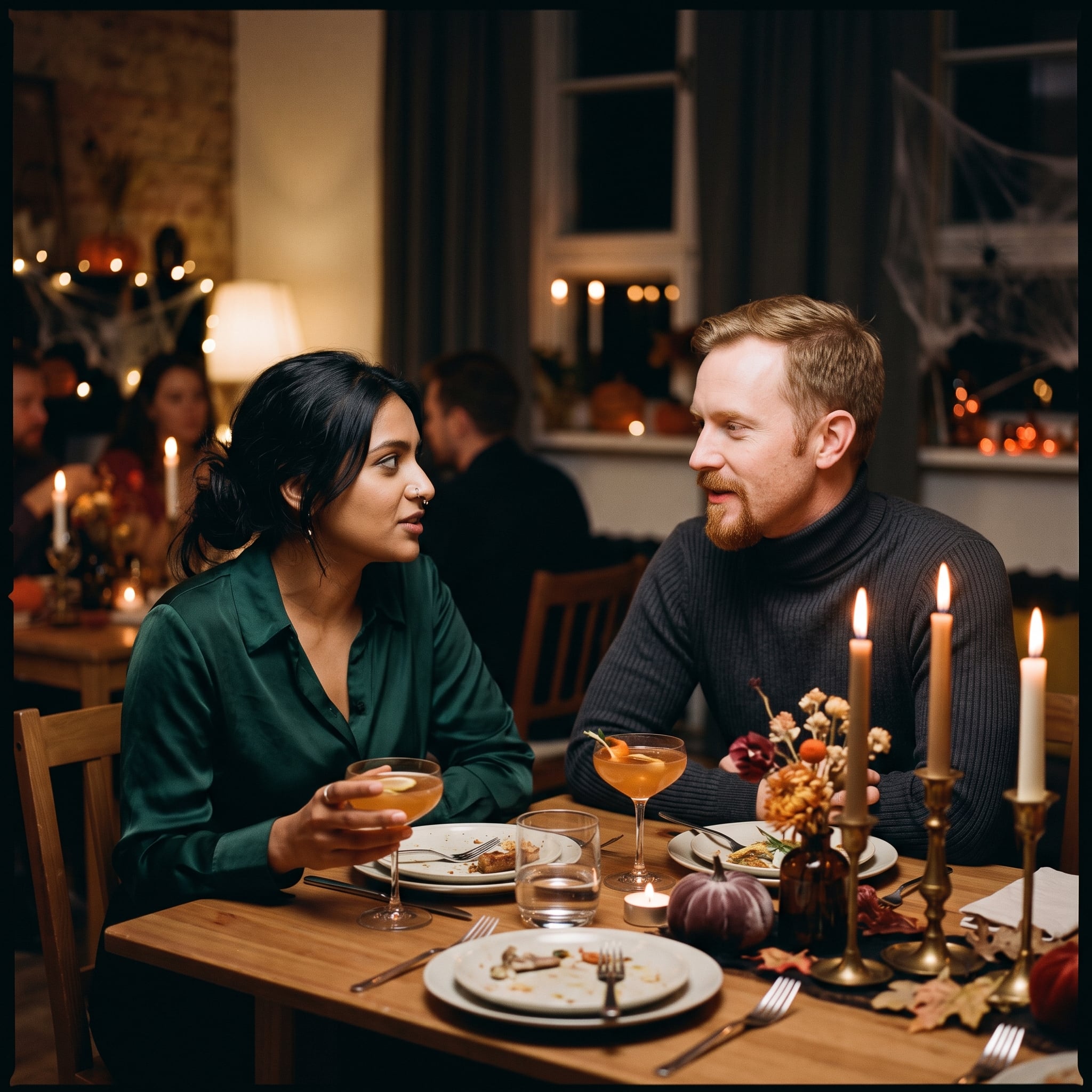
A Halloween party changes dramatically once the guest list reaches double digits. With four or five people, everyone can sit around one table and join the same activity. With 15, 20, or 25 guests, that approach can quickly create long waits, crowded tables, and people standing around while someone else takes a turn.
That is why halloween games for large groups need a different kind of planning. The focus is less on finding one activity that everyone can play simultaneously and more on creating several ways for guests to participate.
A large party can have a main game, a quick tabletop station, a card table, a drinks area, and a casual activity happening at the same time. Guests can move naturally between them instead of waiting for one game to finish.
The result feels less like a scheduled event and more like a party with plenty happening around the room.
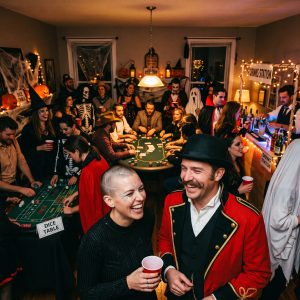
Why Halloween Games for Large Groups Need a Different Approach
The biggest challenge at a large Halloween party is rarely a lack of activities. It is participation management.
Imagine a game where 20 people have to wait while one person completes a challenge. Even if the game itself is entertaining, most of the room is inactive for too long.
Large groups work better with activities that have:
- Short rounds
- Multiple players
- Simple rules
- Flexible entry points
- Easy spectator participation
- Quick transitions
This is why halloween games for large groups often work better when they are divided into smaller experiences.
A dice table might accommodate four to six people. A poker table can support another group. A roulette station can attract guests for shorter rounds. Meanwhile, other guests can be talking, getting drinks, or joining another activity.
The party does not have to revolve around one game.
That distinction is important when planning a large Halloween event. You are not simply selecting games. You are designing a system that allows people to participate at different times.
How to Keep a Big Group Playing
Large group games become easier to manage when guests can join and leave without disrupting everyone else.
Short rounds are especially useful. If a game takes five to ten minutes, guests can step in for a round, leave for food, and return later without feeling like they missed an entire event.
Dice games are useful for this reason. Keep one or more dice stations available with a clear playing surface and enough dice for several people to participate.
Card games can serve a similar role. A dedicated table with poker cards and poker chips can create a more structured activity for guests who want something competitive.
Other guests might prefer something lighter.
For halloween games for large groups, think in layers:
Main activity: A longer game for guests who want sustained gameplay.
Quick activity: Something that takes only a few minutes per round.
Social activity: An option that allows people to talk while participating.
Atmosphere activity: Music, drinks, costumes, photos, or a themed challenge that does not require everyone to stop what they are doing.
This structure reduces pressure on any single game to entertain the entire room.
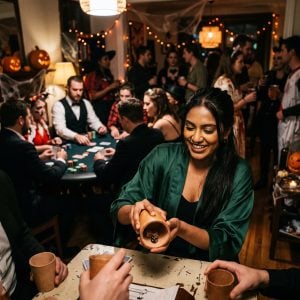
For 10–15 Guests: Keep the Game Flow Simple
A group of 10–15 people is large enough to create energy but still small enough for everyone to remain within the same general area.
You can usually manage this size with two or three activity points.
One option is a central tabletop game with a secondary dice station nearby. Another is a poker setup paired with roulette or a shorter party game.
The main consideration is capacity.
If a game comfortably accommodates five people, do not place 12 guests around the same table and expect everyone to stay engaged. Instead, allow the game to operate in rounds.
For example:
Station 1: Main tabletop game for 4–6 guests
Station 2: Dice game for 3–5 guests
Station 3: Cards or casual activity for 3–5 guests
Guests can rotate whenever a round ends.
For halloween games for large groups at this size, you can also use a single host to explain each station before the evening gets busy.
Keep the rules visible or easy to repeat. Once guests understand the basics, the host should be able to step away and enjoy the party too.
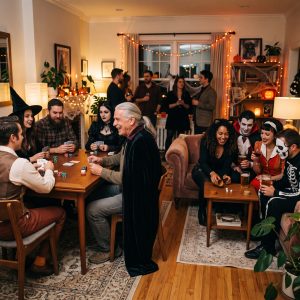
For 15–25 Guests: Give Guests More Ways to Play
Once the guest list reaches 15–25 people, multiple stations become much more important.
Trying to gather everyone around one activity usually creates bottlenecks. Instead, divide the room into several areas with different levels of participation.
A useful combination might include:
Casino Table
Use poker cards, poker chips, and a roulette setup for guests who enjoy longer competitive games.
Dice Station
Set up several dice sets so a small group can start a quick round without waiting for another table to finish.
Party Game Station
Use one of your party game kits for short rounds that can accommodate changing groups.
Social Area
Keep one area free for conversation, drinks, snacks, and guests who want a break from structured activities.
For halloween games for large groups, this arrangement creates choice without requiring a complicated schedule.
Guests naturally move toward the station that matches their mood.
Some may spend 30 minutes at the casino table. Others might play two quick dice rounds and then get a drink. Someone else may spend most of the evening talking and join a game occasionally.
That flexibility is an advantage rather than a problem.
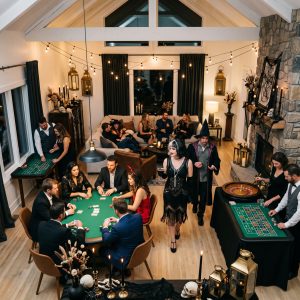
For 25+ Guests: Build a Party Around Multiple Stations
At 25 or more guests, think of the party as a collection of smaller groups rather than one giant group.
The room should have several obvious participation points.
For example, a large home party could have:
- A main casino area
- Two dice tables
- A party game station
- A photo or costume area
- A dedicated drinks station
- A comfortable conversation area
You may also need duplicate equipment.
One dice set will not be enough if 20 or 30 guests want to play at different times. Having Multiple Dice Kits allows you to create separate tables without moving equipment around the room.
The same principle applies to games that depend on specific equipment.
If one station becomes crowded, guests should have another option nearby rather than forming a queue.
For halloween games for large groups, duplication can sometimes be more useful than adding more types of games.
Three simple stations with good capacity are often easier to manage than ten activities that each require complicated instructions.
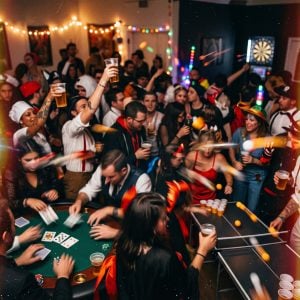
Create Multiple Game Stations
Multiple stations give a large Halloween party a natural rhythm.
Each station should have a clear purpose and a reasonable capacity.
Think about the room from the guest’s perspective.
When someone walks into the party, they should be able to understand where the action is without asking the host for instructions every few minutes.
A simple setup could look like:
Station A — Casino
Poker and roulette for guests who want a more structured game.
Station B — Dice
Fast rounds using several dice sets.
Station C — Party Games
Short social games with changing groups.
Station D — Drinks
A separate area where guests can refill without interrupting gameplay.
Station E — Social
A comfortable space for conversation and downtime.
Lighting can help distinguish the areas. For example, LED cups can make a drinks station visually noticeable without requiring extensive decoration.
The stations do not need to be far apart. They simply need enough separation that people can move between them comfortably.
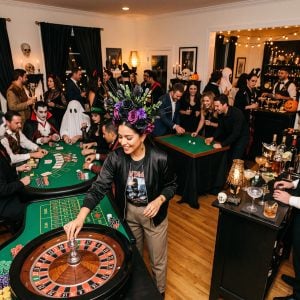
Keep Guests Moving Between Activities
Movement is one of the easiest ways to prevent a large party from becoming static.
Instead of announcing every transition, create natural reasons for guests to move.
A game round can end with players switching stations. A new drink can be introduced. A short costume challenge can bring people together. Food can create a pause before another game begins.
This works particularly well for Halloween games for large groups because the party itself becomes part of the transition.
You can also create simple rotation periods.
For example:
Round 1: Guests start at their preferred station.
Round 2: Anyone who wants to switch moves to another game.
Break: Drinks, food, photos, or conversation.
Round 3: Introduce a new game or repeat the most popular option.
The important part is keeping movement optional.
Guests should never feel forced to leave a game they are enjoying simply because the schedule says so.
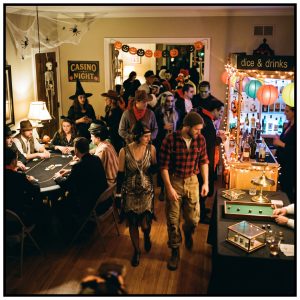
Build a Large-Group Halloween Game Schedule
A large Halloween party benefits from structure, but the schedule should remain loose.
A three- to four-hour evening could follow this rhythm:
7:00 PM — Arrival
Guests enter, grab drinks, and explore the different activity areas.
7:30 PM — Stations Open
Dice, cards, roulette, and other games begin.
8:15 PM — First Rotation
Encourage guests to try another station or join a different group.
9:00 PM — Food Break
Pause the more structured activities while guests eat and socialize.
9:45 PM — Main Game Period
Bring more attention to the most popular games.
10:30 PM — Quick-Round Games
Open shorter activities for guests who want continued interaction.
11:15 PM — Relaxed Finish
Leave the stations available while the party gradually becomes more social.
This type of structure gives halloween games for large groups enough organization to prevent dead periods without turning the party into a formal program.
If you are coordinating food, decorations, games, and equipment, a Halloween party checklist can also help keep the setup manageable.
Final Thoughts
The most effective large-group Halloween party is rarely built around one activity.
Instead, it gives guests several ways to participate, move around, take breaks, and return to games whenever they feel like it.
That is the real advantage of well-planned halloween games for large groups. The party can support different personalities without requiring everyone to enjoy the same thing at the same time.
For 10–15 guests, two or three stations may be enough. At 15–25, separate gaming areas become more useful. Once the guest list reaches 25 or more, duplicate equipment and clearly defined activity points can make a major difference.
You can also use Halloween party activities to add non-game options between rounds, while broader Halloween party supplies can help tie the different stations together visually.
For more general inspiration, Halloween party games for adults can help expand the activity mix, while smaller gatherings may benefit from ideas designed specifically for fewer guests, such as Halloween party ideas for small groups.
The important shift is simple: large parties do not need one game that works for everyone.
They need enough opportunities for everyone to find something worth joining.